

How the Construction Industry Can Keep Sustainable Initiatives Moving
The construction industry remains under pressure to become more sustainable and reduce Green House Gas (GHG) emissions. While the industry has covered good ground in sustainable construction and net zero projects, more is called for. In this blog, Anika Sharma, Supply Chain Director at British Gypsum, considers how collaboration with the right partners can help clean up the logistics process for the sector.
Net Zero by 2050: Are We on Track?
With the 2050 net zero target approaching, the construction industry must accelerate its efforts to reduce carbon emissions. According to a report by the UK Green Building Council, the sector is behind schedule. But with certain contractors setting even more ambitious goals for the 2030’s and 2040’s the sector is starting to feel this increased sense of urgency.
Simple Steps for Reducing Construction Emissions
With a significant amount of work ahead, a few straightforward yet impactful adjustments can help contractors accelerate their sustainability goals. If suppliers focus on the emissions generated by their logistics, this alone can lead to substantial reductions in Scope 3 emissions.
Making Sense of Scope 1, 2 and 3 Emissions
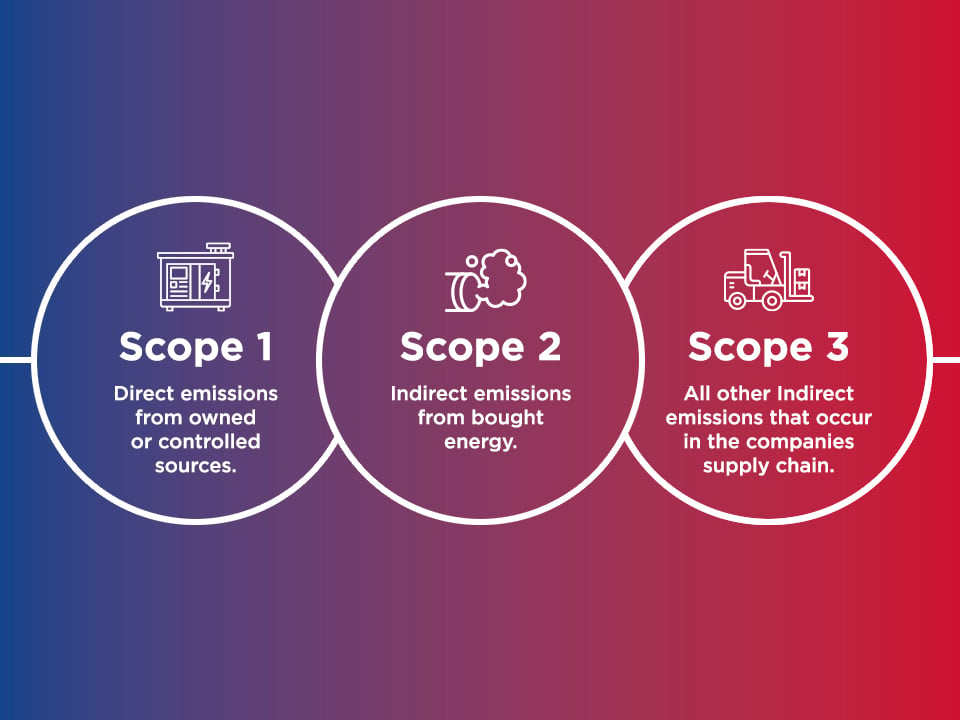
For the industry to accomplish its carbon output goal, it’s important for us all to understand how various forms of emissions are broken down:
- Scope 1 emissions are the sources that are owned or controlled by a company or organisation. An example of this would be fuel combustion through powering generators.
- Scope 2 emissions are the outcome of a company or organisation’s activities but are owned or controlled by another entity, such as energy.
- Scope 3 are all emissions not covered in Scope 1 and 2 and created by a company or organisation’s supply chain. For instance, the emissions generated by the mining of raw materials used in the products a supplier manufactures.
Logistics also falls under Scope 3, where road transport significantly contributes to emissions. The construction industry consumes enormous quantities of goods and materials, mostly transported by HGVs.
Transport's Role in Lowering GHG Emissions
Transport is the largest contributor to UK greenhouse gas emissions, responsible for 26% of total emissions in 2021. So, British Gypsum has prioritised a cleaner alternative, Hydrotreated Vegetable Oil (HVO) something that would actually help cut logistics emissions today. Other considerations the company are making include Bio-LNG (liquified natural gas) and EV trucks.
British Gypsum’s Commitment to Sustainable Logistics
As part of Saint-Gobain Interior Solutions, British Gypsum has heavily invested in the use of HVO fuel for deliveries. More than 80% of British Gypsum’s delivery vehicles’ fuel is now HVO, and over 60% of deliveries are now supplied by HVO-powered trucks. Investment, including on-site installation of fuel points and storage tanks at multiple sites, underlines British Gypsum's commitment to reducing Scope 3 emissions as HVO fuel offers an approximate 90% reduction in CO2 emissions.
What's Next for Sustainable Construction Logistics?
Although HVO comes in at a higher price than traditional diesel, the environmental benefits make it well worth the investment. For British Gypsum, HVO is an important stepping stone towards the journey to net zero. As part of that journey British Gypsum’s fleet will continue to be reviewed and updated as new, cleaner fuels become available for long hauls. As the industry continues to evolve to meet the challenges of sustainability, that requires increasing collaboration between suppliers and contractors. British Gypsum is working hard to help pave the way with a host of innovative solutions to help the industry meet its net zero ambitions.
Stay Ahead with Building Better
The construction industry is moving at an incredible pace. To help you keep up to speed, Saint-Gobain Interior Solutions has introduced the Building Better Hub to give you the latest in sustainable construction: articles, videos, podcasts, and more. Learn more about how you can improve your sustainability practices and help the industry meet net zero goals.
Join the conversation on Building Better: Visit saint-gobain.co.uk/building-better-hub.