
Green cities of comfort and joy
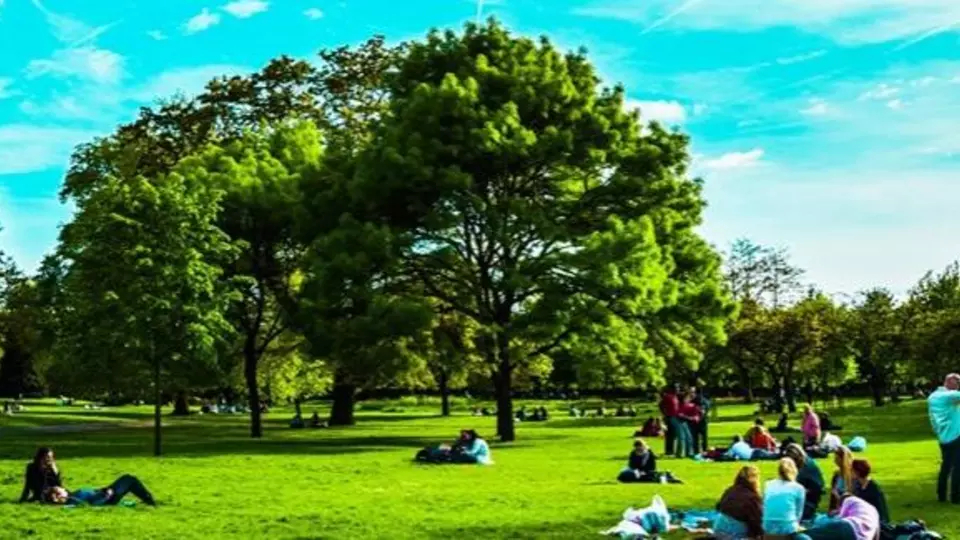
In July 2019, Mayor of London Sadiq Khan officially declared London the world’s first National Park City .
But what does this mean, and why is it so important to have – and celebrate – green spaces in our cities?
What is a National Park City?
The working definition of National Park City is: “A large urban area that is managed and semi-protected through both formal and informal means to enhance the natural capital of its living landscape”.
It’s a vision created and promoted by the National Park City Foundation, which aims to have 25 National Park Cities around the world by 2025.
Hot on the heels of London are Newcastle in the north of England and Adelaide in Australia. Other cities moving towards the designation include Pittsburgh in the US, Glasgow in Scotland and Toronto in Canada.
Why the big focus on nature in urban areas?
Imagine cities where green space is king. Pedestrians, cyclists and sustainable public transport rule the transport corridors. Biodiversity thrives and the built environment sits snugly in this idyll, complimenting it and benefitting from the proximity.
This isn’t a utopian dream – many businesses, organisations and individuals are working hard to make this a reality.
But why?
Research found Birmingham’s parks and open spaces provide £11 billion worth of value to the city . One of the many annual benefits for residents are 28 fewer deaths thanks to the capture of 350 tonnes of pollutants by Birmingham’s woodland. That reduced pollution adds 489 life years for citizens and avoids 133 hospital admissions each year. For every £1 the council invests in its parks and greenspaces, the city receives a return of more than £24.
Who would not want to live and work in an environment like this?
How can we build a greener, healthier future?
The population of Birmingham is somewhere around 1.2 million. The Office for National Statistics predict London’s population will swell by about three quarters of Birmingham’s total to reach 9.5 million by 2026 .
Smart, high density development is the only way London will be able to accommodate this expansion without snapping the greenbelt.
Green and brown roofs, living walls, water capture and storage, and mixed-use, adaptable open spaces will all be vital in future developments. Alongside this, we’ll also need greater consideration to transport links, waste management, building materials, biodiversity, community health, social, cultural and educational infrastructure – and, of course, affordability.
A hope for future design
We need smart, resilient design now and into the future. The National Park City Foundation champions greener, cleaner and healthier living. As part of this, the organisation wants to see more people being active outdoors, better access to improved green spaces, and joined-up, people-focused infrastructure; from public drinking fountains, better signage, connected communities and inclusive public spaces.
There is currently no legislation demanding all these changes. The Government has declared a climate emergency. There is widespread public acknowledgement that our lifestyles will have to move away from a carbon economy and meat-rich diets.
My challenge to developers and the construction industry is how will you act to improve our built environment?
I want more than a bit of nice landscaping or recycled material. I want to see you innovate spectacularly. I want you to become world leaders in the supply and development of materials, structures, design, supply, manufacturing and re-use. We can do this together.
Huge changes are coming to the UK in the way we interact with Europe and the rest of the world. We need to find solutions and drive innovation with our limited resources. By bringing industries such as construction, health, education and food together, we can work as one society to find true solutions by sharing our expertise.
Working with nature to enhance our surroundings, re-wilding rivers to create water features and improve storm-water management, planting trees and increasing green space to reduce heat island impact, or adding living walls and roofs to support insulation – these are just some of the changes we can make to improve our cities and built environments.
Roughly 47 per cent of Greater London is ‘green’, over 2 per cent is blue space, such as rivers, canals and reservoirs, and about 24 per cent is private, domestic gardens . It wouldn’t take much to make more than half of the capital green. And as we’ve seen from some of the earlier statistics cited, the benefits to health, wellbeing and our world would be invaluable.